

Flatbed vs Wheel-Lift Towing: Which Does Your Car Need?
The flatbed vs wheel-lift towing question comes up on almost every call. The dispatcher asks what you drive and whether it rolls, and that is not small talk: the answers decide which truck comes, and sending the wrong one can do real damage.
In this guide
Wheel-lift towing
A wheel-lift truck slides a metal yoke under two wheels and lifts that end of the car clear of the road. The other two wheels stay down and roll along behind.
It is quick, it fits into tight spots a flatbed cannot reach, and for a lot of everyday tows it is exactly the right tool. The catch is that two wheels are still turning, which means part of the drivetrain is still moving.
Flatbed towing
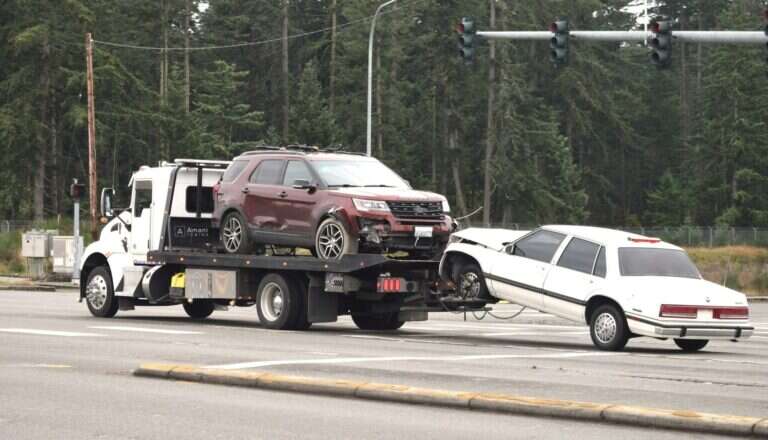
A flatbed tilts its deck to the ground, winches the vehicle up, and carries it with all four wheels off the road. Nothing in the drivetrain turns during the trip.
It takes more room to load and costs more to operate, but it is the safest way to move a vehicle, and for some cars it is the only correct option.
Flatbed vs wheel-lift towing at a glance
- Wheels on the road: two with a wheel-lift, none on a flatbed.
- Tight spaces: the wheel-lift wins in parking decks, narrow streets and spots with little room to maneuver.
- AWD and 4WD: flatbed, or a wheel-lift with dollies under the other wheels.
- Damaged or non-running vehicles: flatbed.
- Cost to run: the wheel-lift is usually cheaper, the flatbed a little more.
Vehicles that should always go on a flatbed
- All-wheel drive and four-wheel drive. On most AWD systems, turning any wheel turns the drivetrain. Towing one with wheels down can damage the transfer case or differentials.
- Low-clearance and sports cars. Front lips and low bumpers catch on a wheel-lift approach and on driveway transitions.
- Vehicles with drivetrain or suspension damage. If a wheel will not turn freely, it must not be dragged.
- Classic, exotic and newly purchased vehicles. When condition matters, flatbed towing removes the risk.
- Non-running vehicles. No power often means no steering assist and no brakes. See our guide to towing a non-running vehicle.
- Accident-damaged vehicles, where alignment and structure are already compromised.
What about my front-wheel-drive commuter?
A front-wheel-drive car with a healthy drivetrain can usually travel on a wheel-lift with the front wheels raised. A rear-wheel-drive car goes the other way round, rear wheels up. Both are routine wheel-lift towing jobs.
If you are unsure, say so on the phone. It is a five-second conversation that avoids an expensive mistake, and the honest answer sometimes is “send the flatbed to be safe.”
What your driver should tell you
A good driver will walk the vehicle before loading, point out any damage that already exists, and explain how they intend to hook up. If the vehicle’s condition makes some risk unavoidable (a bumper that may flex, a suspension already sitting low), you should hear about it before the winch starts, not after.
Industry bodies such as the Towing and Recovery Association of America train and certify operators on exactly these hook-up decisions, and it is fair to ask how your driver was trained.
Flatbed vs wheel-lift towing FAQ
Is wheel-lift towing bad for my car?
Not when it suits the vehicle. A healthy front-wheel-drive car towed front wheels up is a routine job. The damage happens when a wheel-lift is used on a vehicle that needed a flatbed.
Can an AWD car be towed without a flatbed?
Only with dollies under the wheels that would otherwise stay on the road, so that all four are lifted. When a flatbed is available, it is the simpler choice.
Does my owner’s manual matter?
Yes. Most manuals include a towing section, and it is worth a look if you drive anything unusual. Tell the dispatcher what it says.
Amani Towing runs both flatbed and wheel-lift equipment across Birmingham, so the truck that arrives is the one your vehicle actually needs. Tell us what you drive when you call (205) 210-8809, or read more about our towing services.