

Winch-Out Recovery: Getting Your Car Out of a Ditch Safely
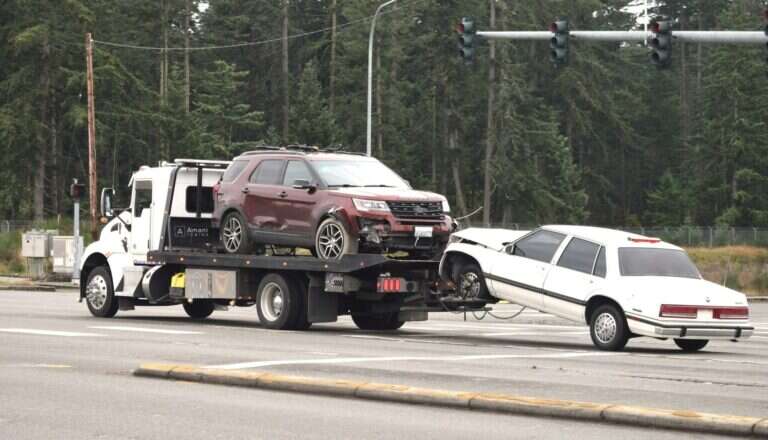
Rain on a soft shoulder, an unfamiliar gravel driveway, or a moment of avoiding someone else’s mistake, and the car is off the road. Getting it back is winch-out recovery, and it is a different job from a standard tow.
In this guide
Why a stuck vehicle is not a normal tow
A standard tow starts with a car sitting on a hard, level surface where the truck can get alongside it. A recovery starts with a vehicle that is somewhere it cannot be driven out of: nose-down in a ditch, sunk into mud, over a curb, or against a bank.
Before anything is lifted, the vehicle has to be moved to where it can be lifted. That is what the winch is for, and it is why winch-out recovery is quoted separately.
What the driver is working out before they touch anything
- The angle of pull. Pulling straight against a bank can dig a car in deeper. The line often has to come from an angle, sometimes redirected around a snatch block.
- Where the truck can anchor. The recovery vehicle needs stable ground of its own, or it becomes the second stuck vehicle.
- Where to attach. Modern unibody cars have specific recovery points. Hooking a suspension arm or a subframe bends things that are expensive to straighten.
- What is underneath. Soft mud, a hidden culvert or a drainage ditch changes the whole approach.
- Traffic. If the car is near a live lane, protecting the scene comes before recovering the vehicle.
How a winch-out recovery works, step by step
- Secure the scene. Lights, cones and the truck positioned to protect everyone from passing traffic.
- Anchor the truck. On firm ground, with outriggers or chocks where the surface needs them.
- Rig the line. Rated straps or chains to the vehicle’s recovery points, with a damper over the cable.
- Pull slowly. A controlled winch, stopping to reset the angle whenever the car starts to dig in or slide.
- Inspect, then tow or drive. Once it is on solid ground, the driver checks tires, steering and fluids with you and you decide together whether it is drivable.
Why you should refuse the friendly pickup truck
Someone will almost always stop and offer to pull you out with a strap. It is well meant and it goes wrong often.
Recovery straps store an enormous amount of energy under tension. When a strap fails or a hook pulls loose, the recoil throws metal at high speed. This is how people are seriously hurt and killed in what looked like a favor. Add an unknown attachment point on a unibody car and you risk tearing the mounting out.
Professional recovery uses rated equipment, controlled winching rather than a running start, and damper lines over the cable. Thank them, and wait.
What you can safely do while you wait
- Get everyone out and well away from the vehicle, on the side away from traffic.
- Leave hazard lights on.
- Do not keep spinning the wheels: it digs the car deeper and can overheat the transmission.
- Note anything you can about the ground: mud, gravel, standing water, a drop-off. It tells us what to bring.
If the car went off the road into water, do not wade back to it. Moving water is far stronger than it looks; the National Weather Service’s Turn Around Don’t Drown guidance applies on foot as well as at the wheel.
Winch-out recovery FAQ
Can I drive my car after a winch-out?
Often, yes, if nothing was damaged on the way into the ditch. The driver will check the tires, steering and underside with you first. If anything is doubtful, it goes on the truck.
Does insurance cover a winch-out?
Many roadside plans include winching within a set distance of the road. Check your policy or motor club, and tell us who your provider is when you call.
Our winch-equipped trucks handle winch-out recovery across the Birmingham metro, day and night. See our full service list or call (205) 210-8809 and describe where the vehicle has ended up.